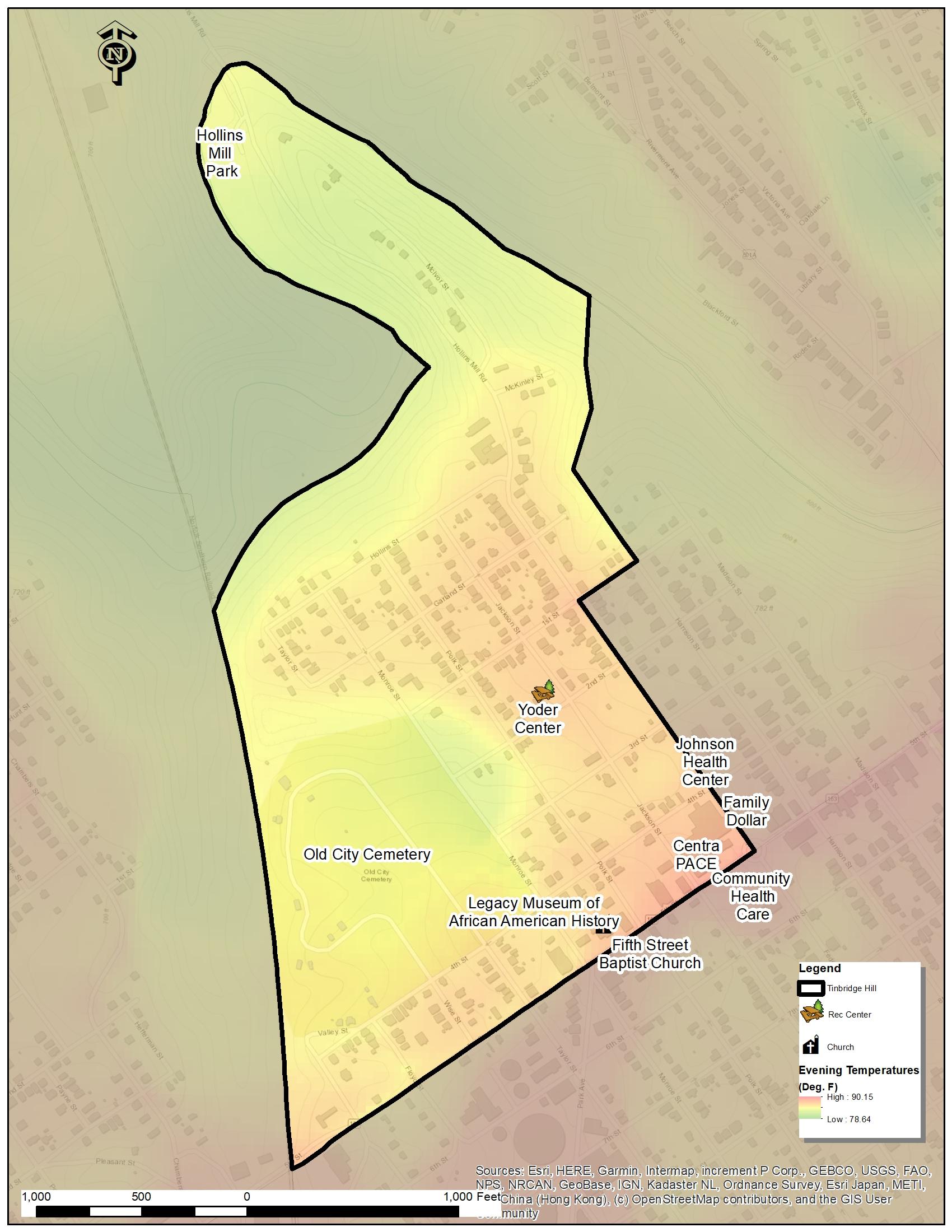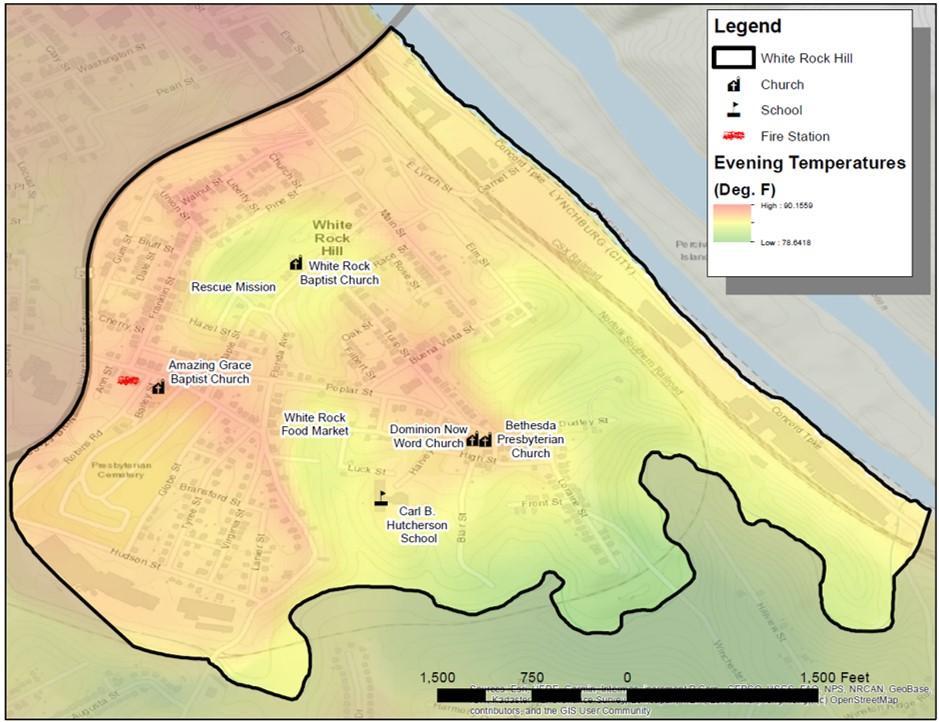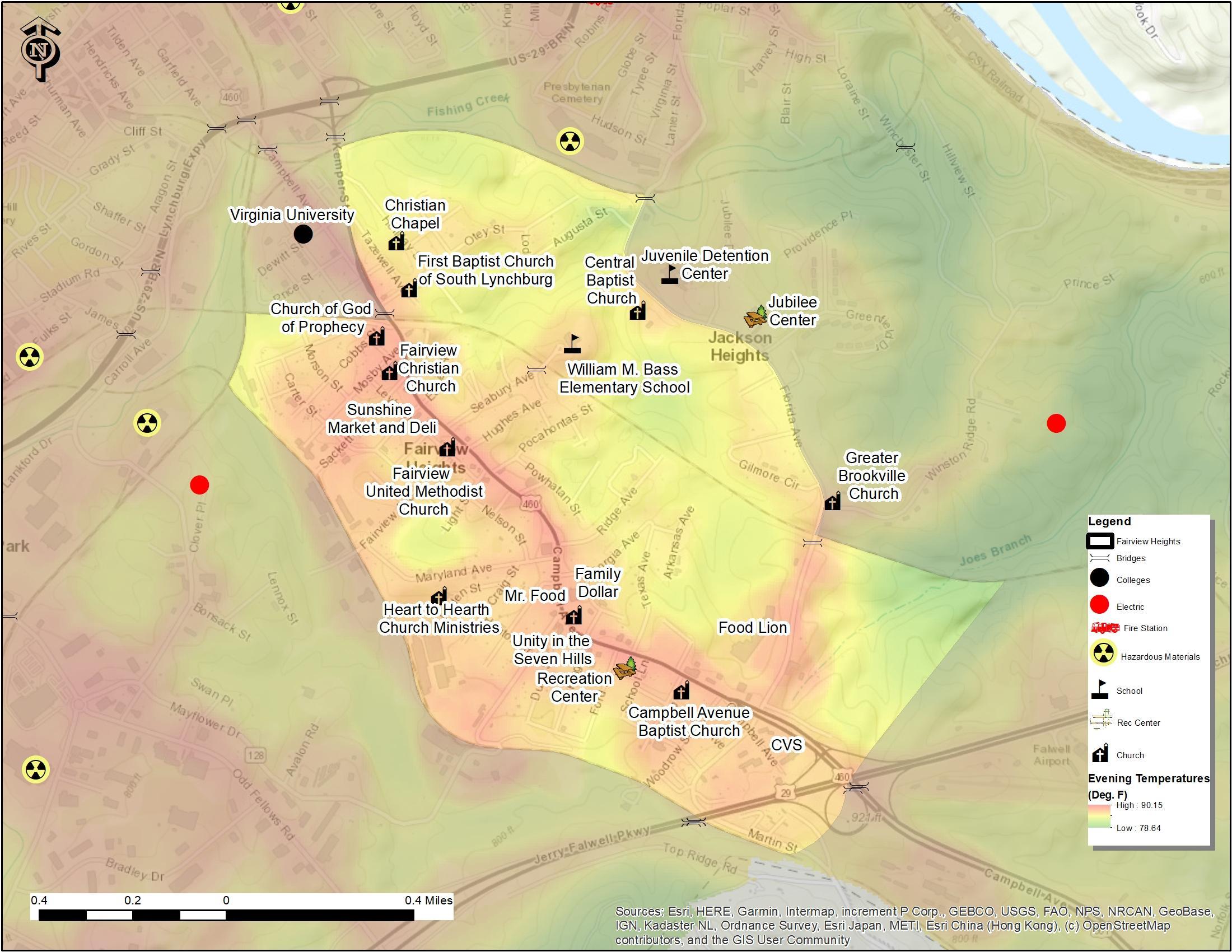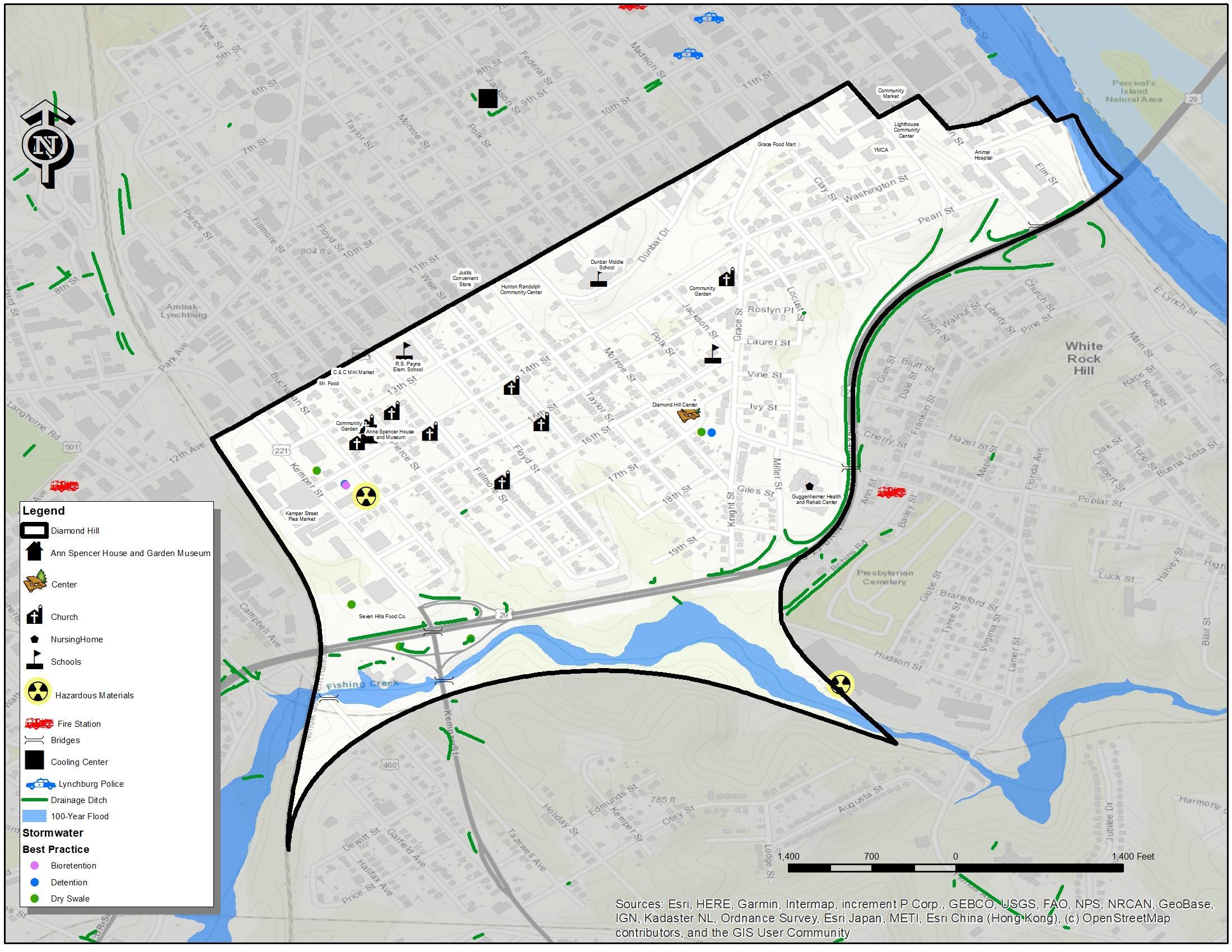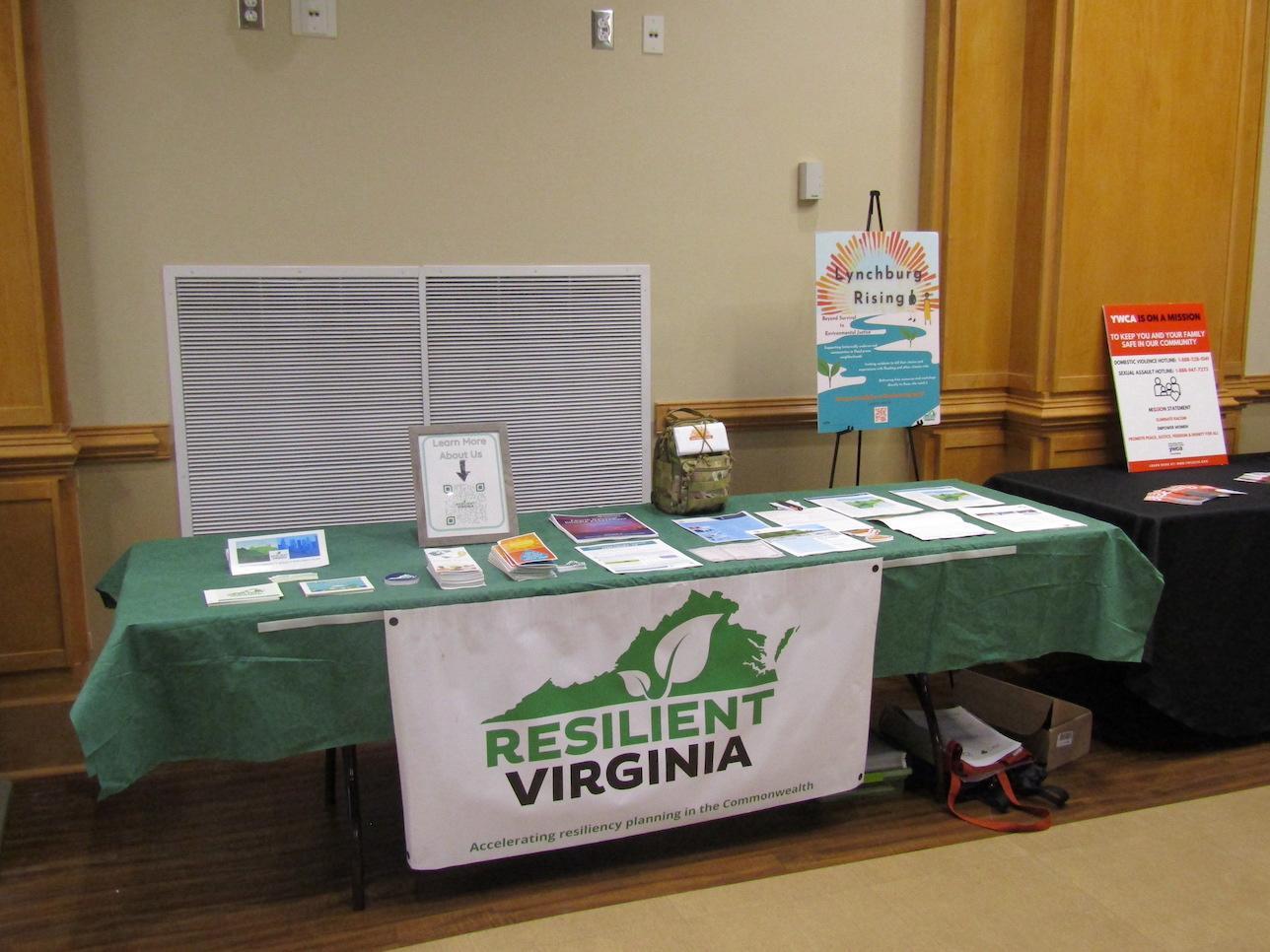
In Lynchburg, flood occurrences, water contamination, and extreme temperature have been identified as current hazards which, due to climate change, will likely be exacerbated. The Lynchburg Rising project, funded by the US Environmental Protection Agency Office of Environmental Justice, engaged historically disinvested neighborhoods in the City, which are disproportionately impacted by these hazards, to better understand their risks and to develop community capacity to address them. This project built on existing sustainability and resilience work being conducted in Lynchburg.
Current Work in Lynchburg
In 2008, the City of Lynchburg developed a Sustainable Vision to create a diverse community working together to promote a healthy and sustainable City with social, cultural, economic, and environmental vitality, now and for future generations. This vision is incorporated in the City’s 2013-2030 Comprehensive Plan.
The Lynchburg Regional Community Resilience Coalition, an informal group of professionals and community stakeholders, has been working to coordinate efforts and align community goals and strategies to promote resilience to climate change and its impacts in South-Central Virginia.
In 2021, two Lynchburg universities – University of Lynchburg and Randolph College – participated in Virginia Heat Watch. This was a collaborative effort between twelve institutions in the Virginia Foundation for Independent Colleges (VFIC) to map and analyze heat islands and vulnerabilities in their communities. The University of Lynchburg, Randolph College, and VFIC are now partnering with the Virginia Department of Forestry, Lynchburg City Schools, and the City of Lynchburg to launch a Food Forest Pilot Project Collaboration. This new project will enhance green spaces in vulnerable communities to offset urban heat island effect.
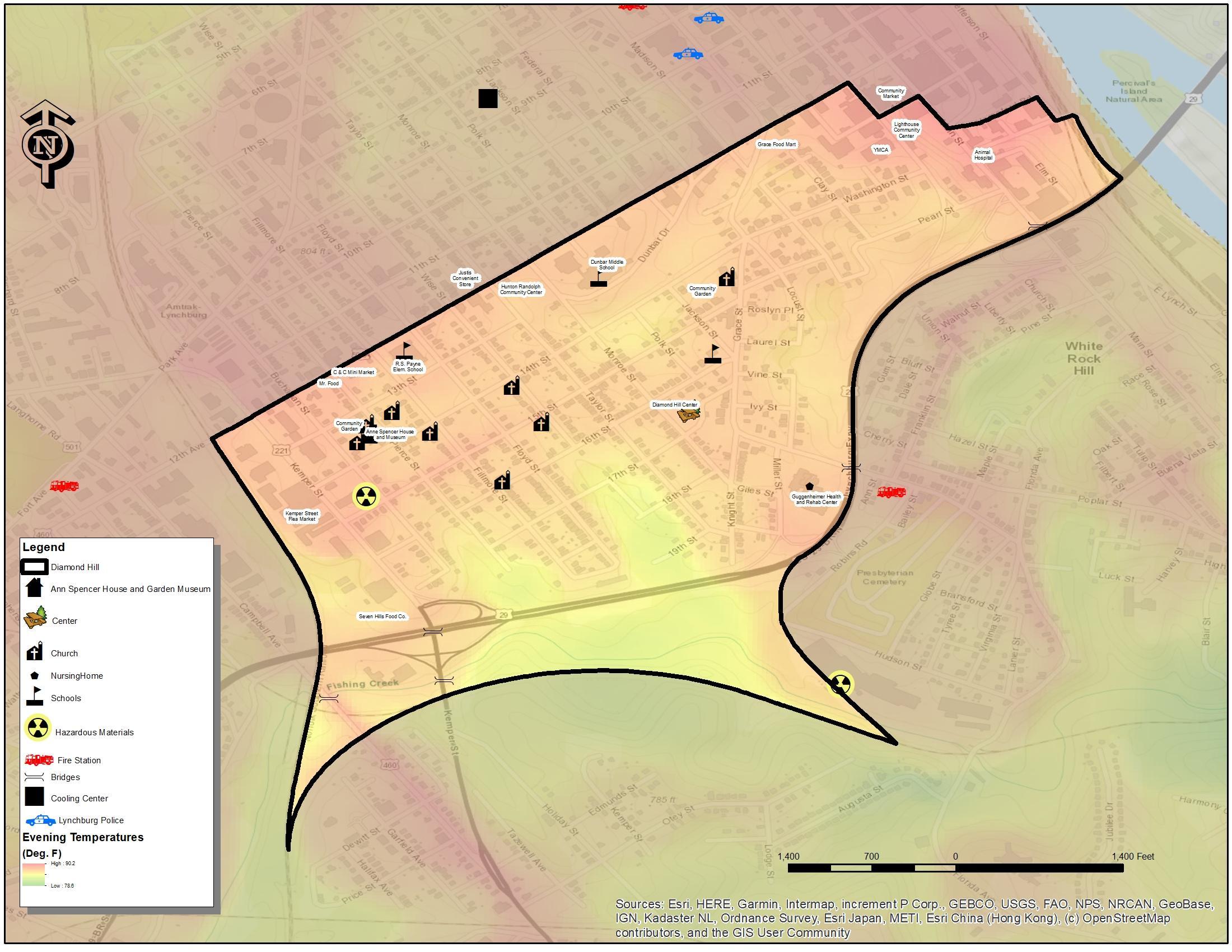
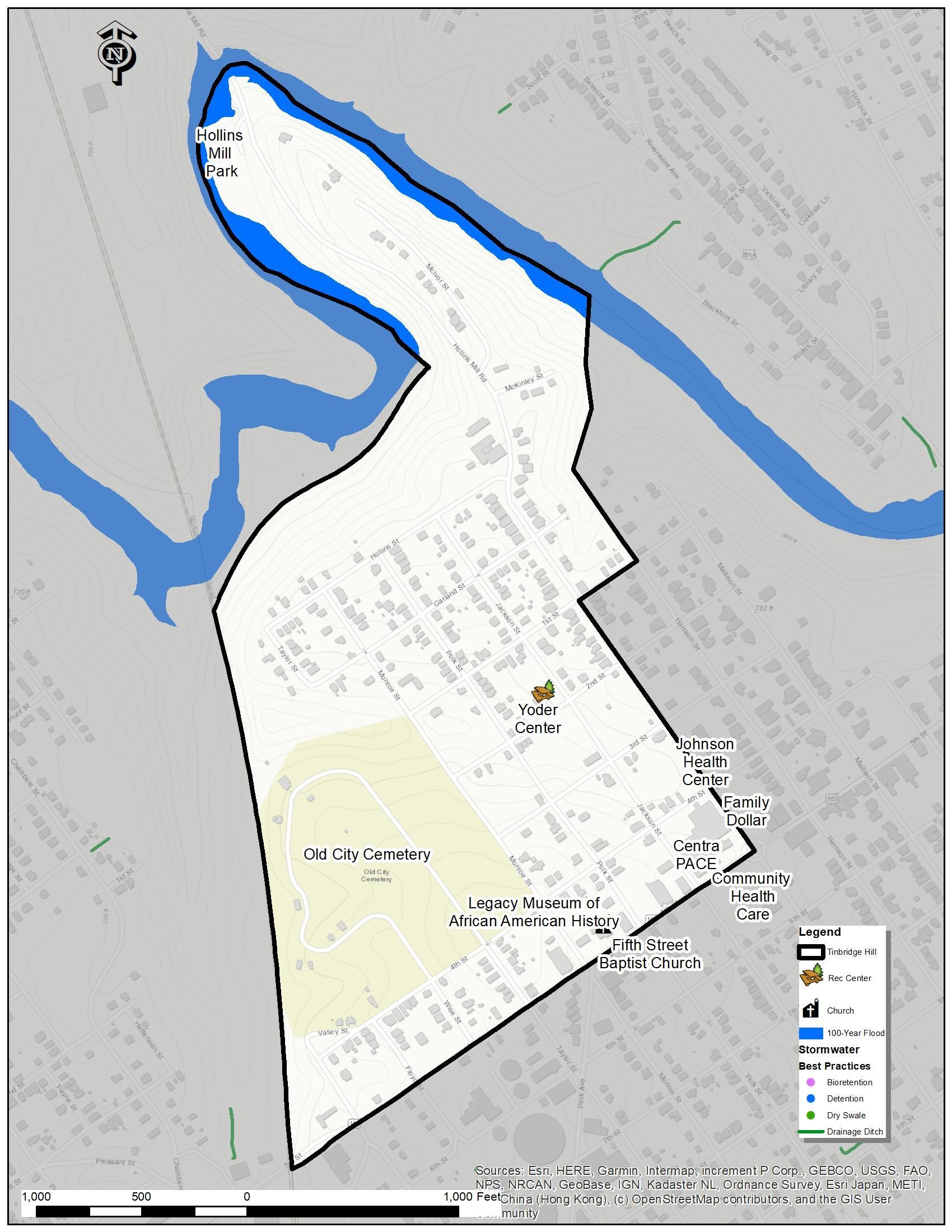
Multiple Lynchburg neighborhoods either have or are working on neighborhood plans, including two of the neighborhoods Lynchburg Rising worked with, Diamond Hill and Tinbridge Hill.
Advancing the Current Work Through Community Engagement
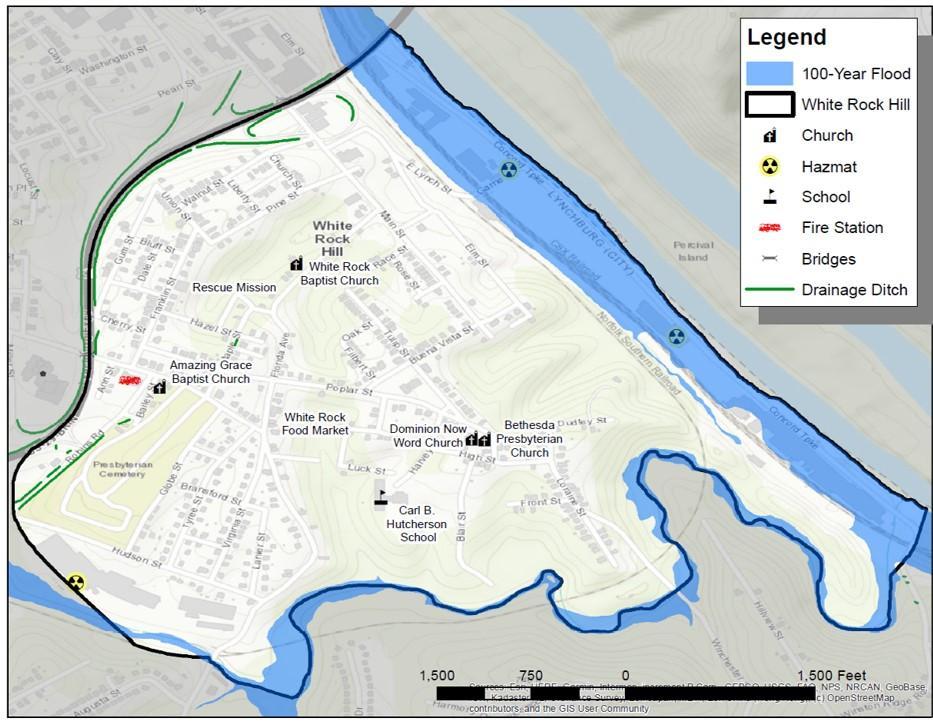
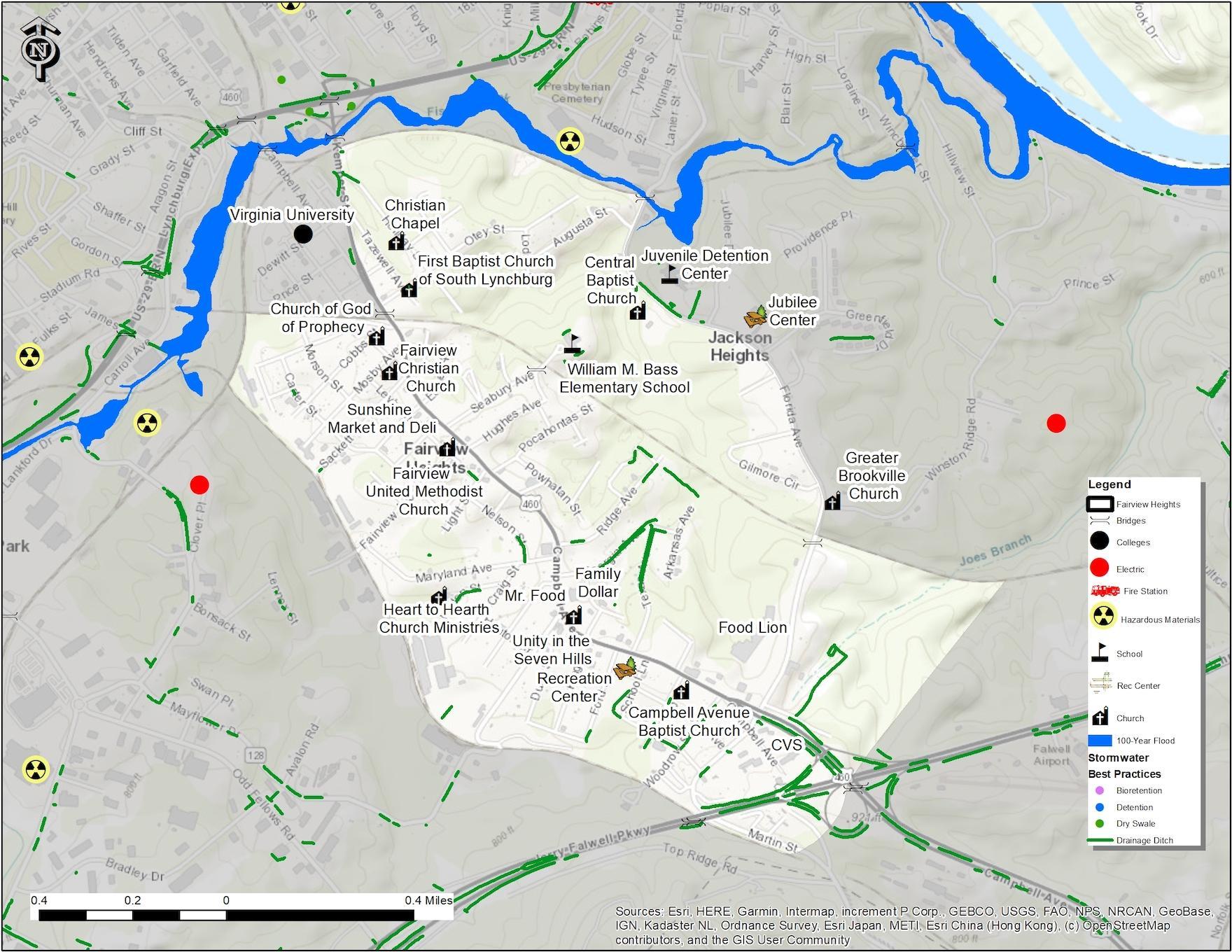
Lynchburg Rising is a collaborative effort between Resilient Virginia, Sobis Inc, Leslie King Consulting, the City of Lynchburg, the Central Virginia Planning District Commission, the University of Lynchburg, Randolph College, and the Jubilee Center. The project set out to advance the work currently taking place in Lynchburg with a focus on four vulnerable neighborhoods. In order to identify neighborhoods at risk, the team started by collecting data to assemble the latest hazard, climate, and demographic vulnerabilities. Data used included:
- Redline maps (digitized)
- Lynchburg property data
- Water resources data
- Water/Sewer connections
- Drainage infrastructure
- Stormwater Best Management Practices (BMPs)
- Neighborhood maps
- Heat island data (3 time periods)
- FEMA floodplains (100- and 500-year)
- Dam inundation maps
- Census data
- Health data (CDC)
- Identify ways to reduce impacts in a manner that would be acceptable to their communities; and
- Diminish the possibility of the jurisdiction developing solutions in a vacuum and trying to implement those solutions in neighborhoods that are not yet invested in the process.
- Cultivate the conditions for collaboration between community members, community based organizations, and local government;
- Strengthen the environmental justice community’s capacity to address flooding and water quality in Lynchburg;
- Help ensure equity concerns are included in future local resilience planning; and
- Increase transparency and public participation in the planning process by incorporating the environmental justice community into the process of finding out about hazards that are being magnified by climate change.
Neighborhood Meetings and Community Engagement
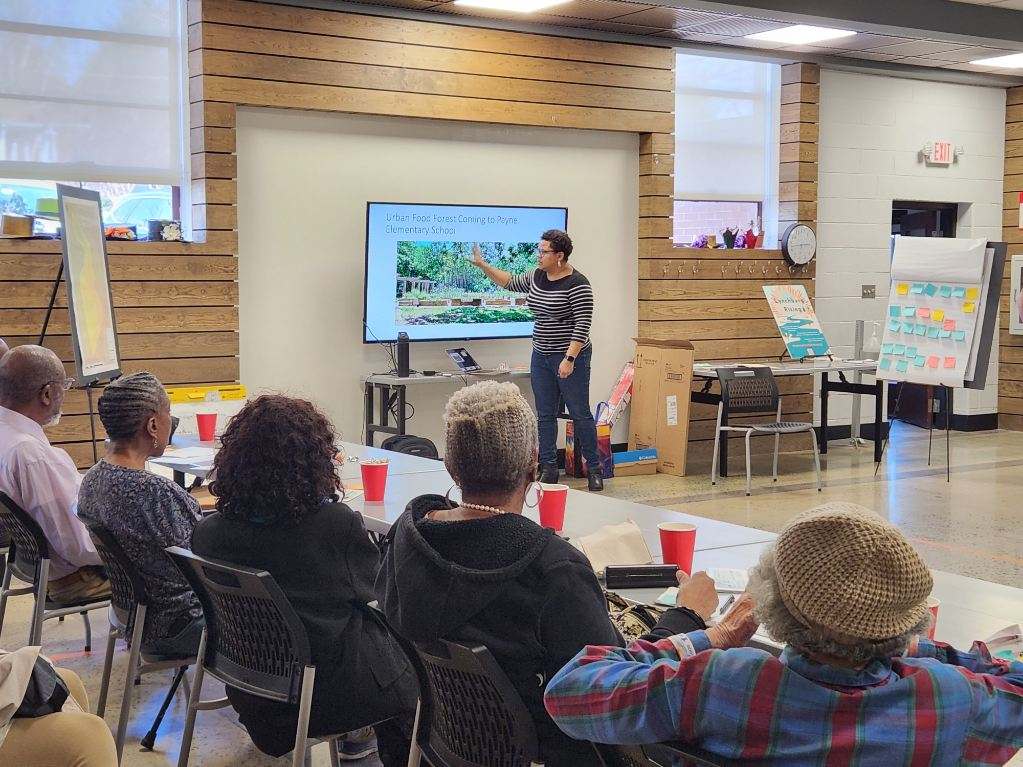
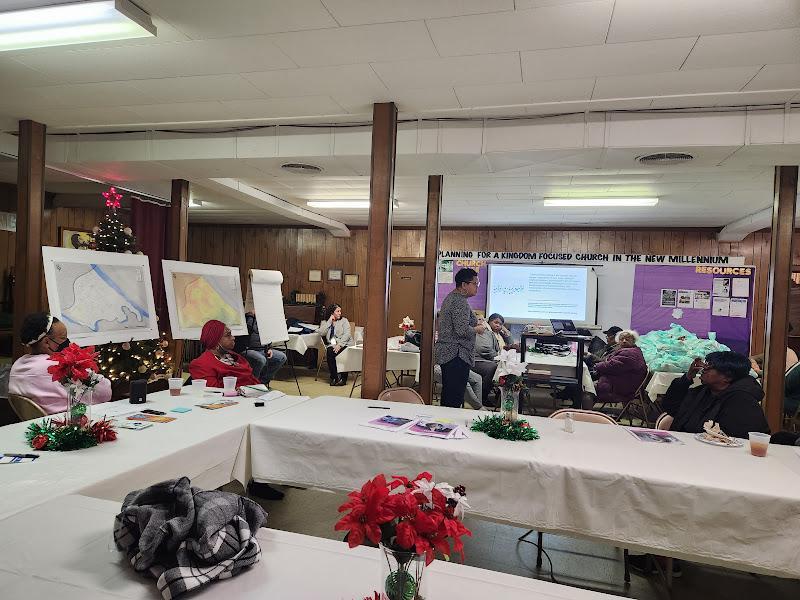
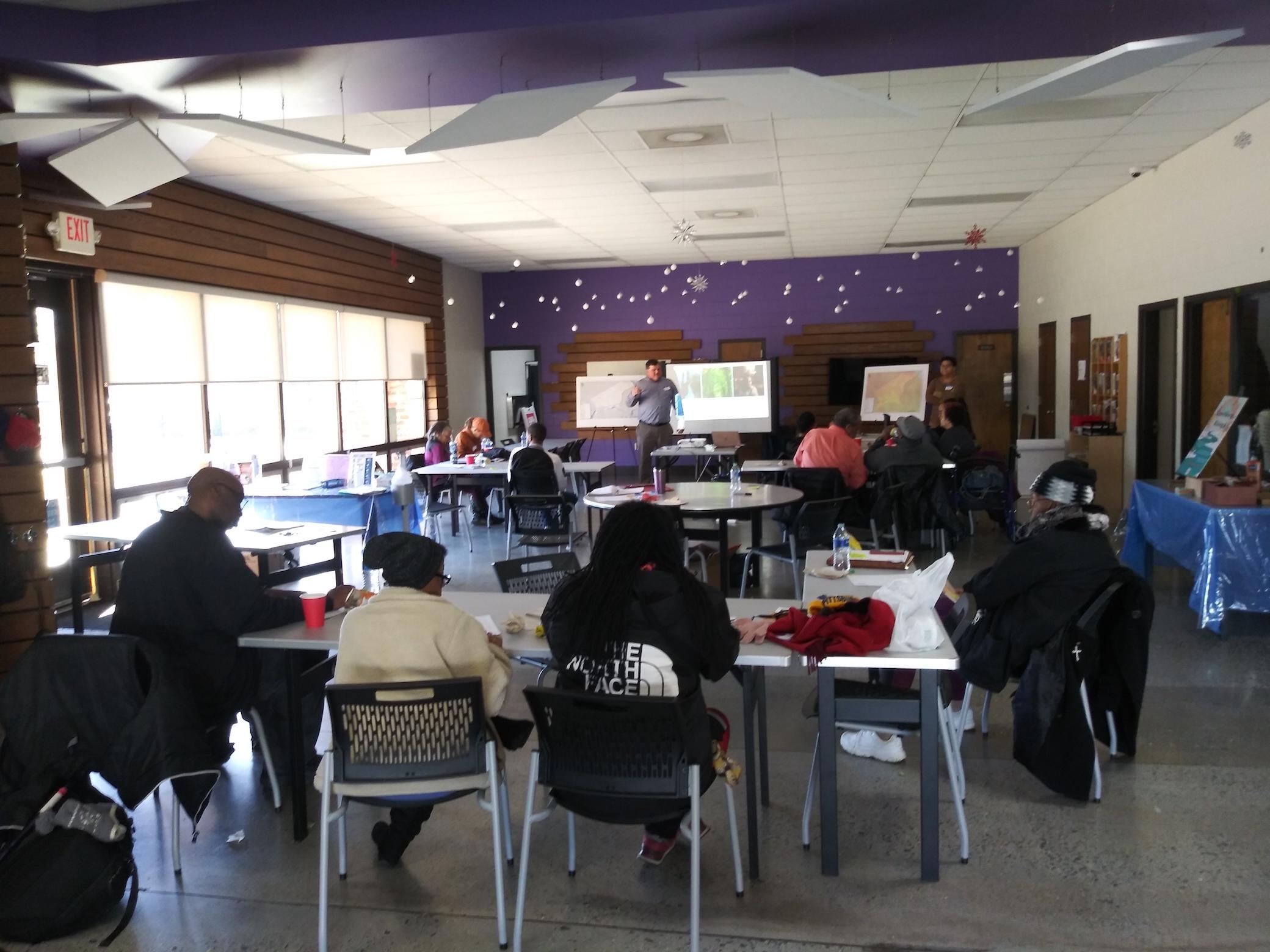
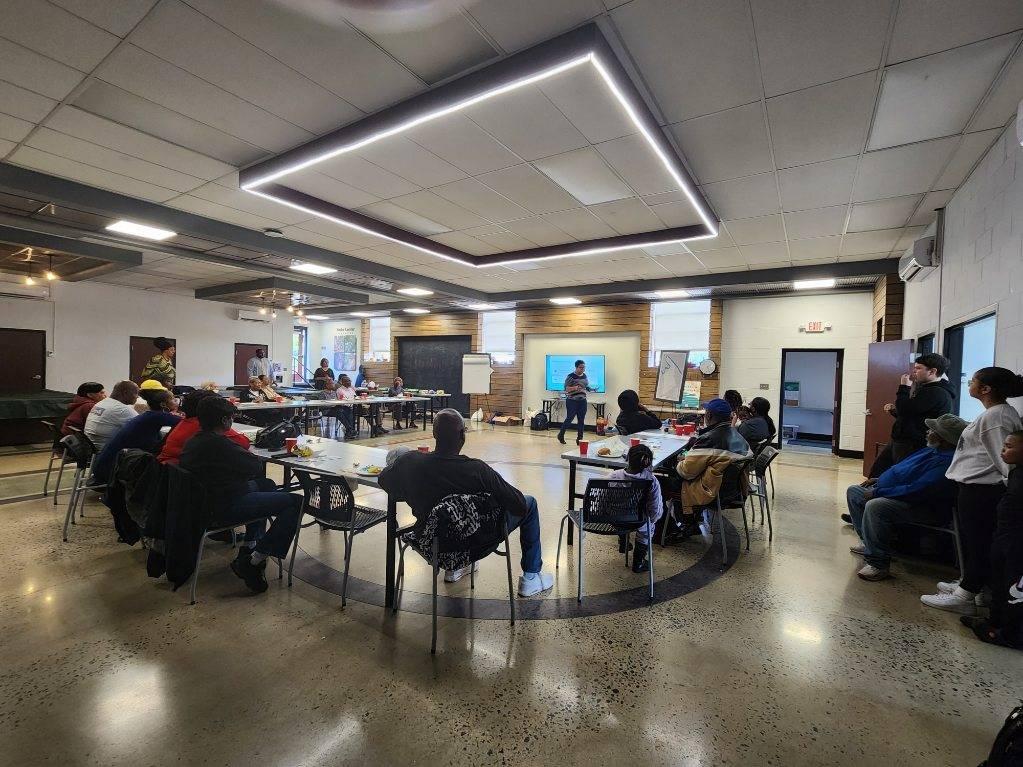
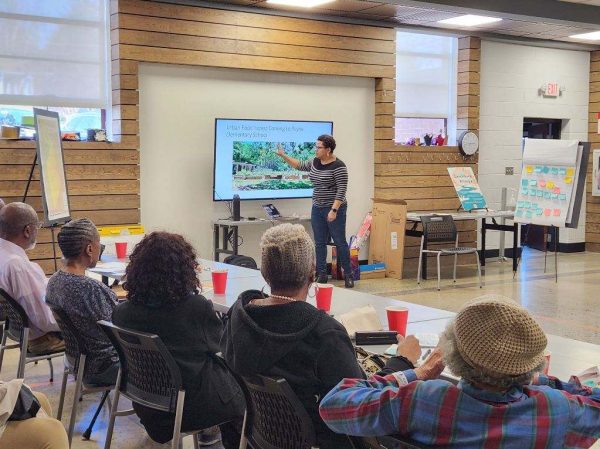
Resilient Virginia participated in the neighborhood meetings as unbiased facilitators, sharing climate risk and hazard information with the residents. The meetings were led by an equity consultant (and Lynchburg resident) and a City representative was also present at the meetings to share a little about what they’re doing.
At the meetings, the Lynchburg Rising team openly recognized the systemic inequities (such as redlining) that put the neighborhoods at higher risk of experiencing greater impacts of climate change and worked to create a safe space for community members to discuss their issues and concerns. Community members were open and honest about their experiences at the meetings, sharing what they consider to be the strengths and assets of their community and the issues they continually face. It was important for the team to not only learn about community members’ issues and concerns, but also to learn about the strengths and assets of each community as these can impact possible solutions to climate hazards and risks.
In addition to neighborhood meetings, Lynchburg Rising spent time reaching out to the community as a whole, educating residents about climate risks and hazards. This was done in various places around town and helped gather information on the citizens’ attitudes toward resilience planning.
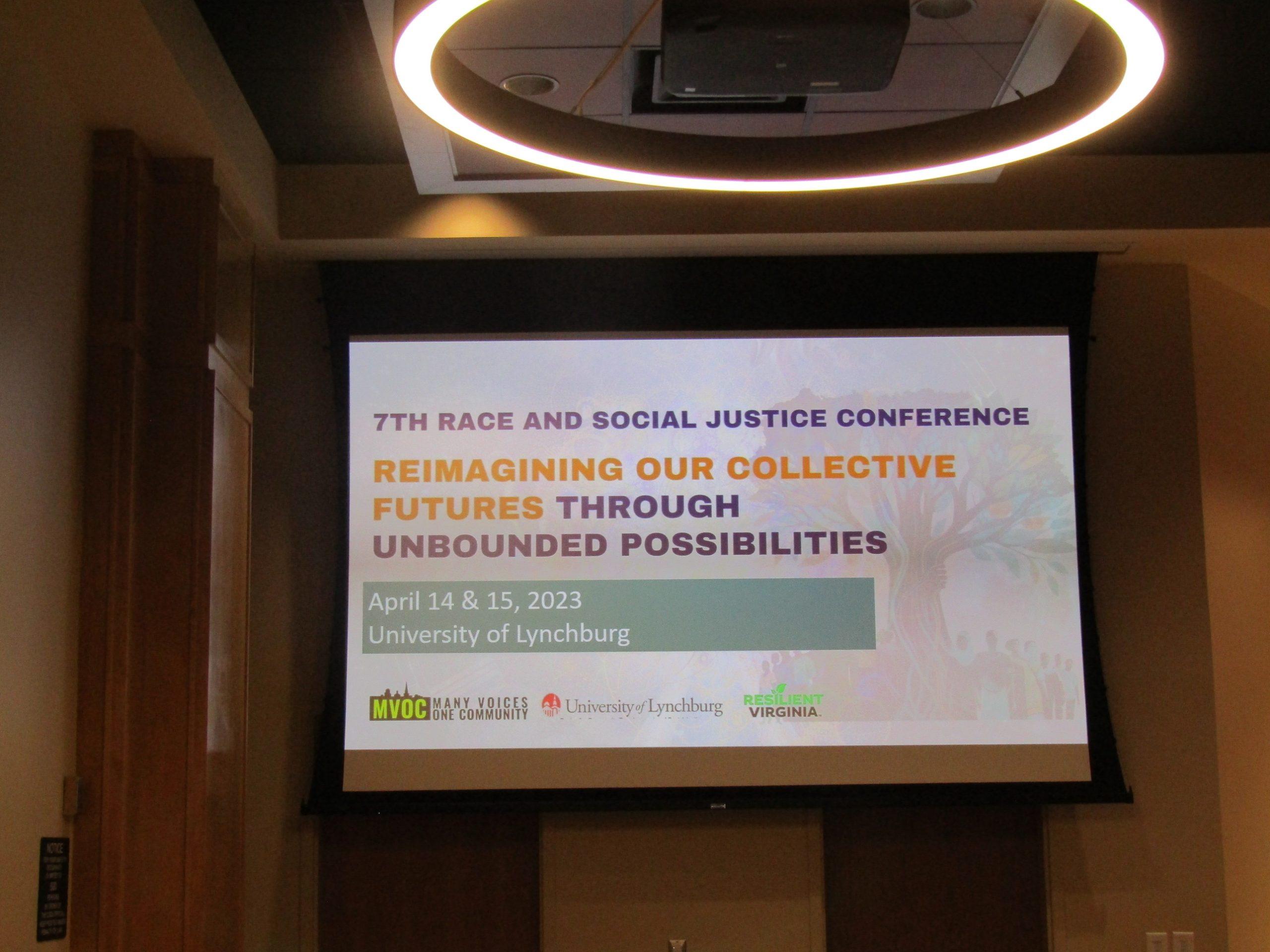
The Lynchburg Rising project concluded with the 7th Annual Race and Social Justice Conference. Resilient Virginia partnered with Many Voices One Community and the University of Lynchburg to host the conference and kicked off the conference with a Lynchburg Rising Roundtable Discussion.
Next Steps
All data collected, issues and concerns voiced by the residents, assets and strengths identified are now being compiled into a report to submit to the City of Lynchburg.
Resilient Virginia plans to maintain these relationships in the future by continuing to seek opportunities to expand the Resilient Lynchburg coalition’s work to undertake community-wide resiliency planning, while supporting social equity perspectives, and helping to ensure that diverse community voices are heard as the city and region move forward on plans to address climate hazards and socio-economic stressors.